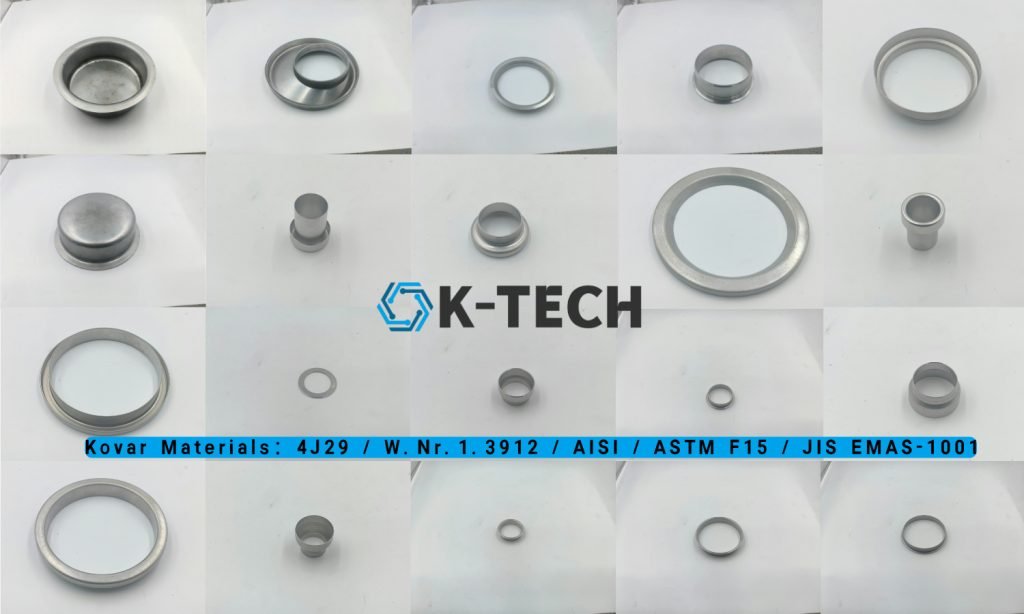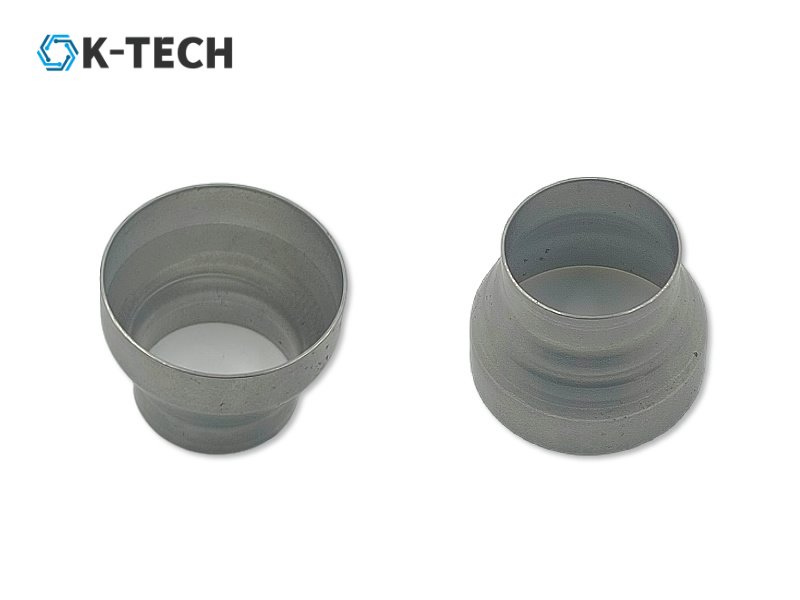
In ceramic-to-metal sealing, Kovar (an Fe-Ni-Co alloy) plays a core role. It leverages its matched coefficient of thermal expansion (CTE) with specific ceramics (e.g., alumina, beryllium oxide) to achieve reliable connections with high airtightness and high-temperature resistance. It is a key material for critical packaging technologies in aerospace, high-end electronics, and other fields.
1. Core Compatibility: Ceramic Types and CTE Matching
Kovar is not compatible with all ceramics; it only matches low-expansion ceramics. The core lies in the consistency of CTE to avoid sealing cracks caused by temperature changes.
| Ceramic Type | Main Composition | CTE (20-500°C, ppm/K) | Compatibility Note |
|---|---|---|---|
| Alumina Ceramic | Al₂O₃ (90%/95%/99%) | 6.5-8.0 | Most commonly used; CTE highly matches Kovar (5-10 ppm/K) |
| Beryllium Oxide Ceramic | BeO | 7.0-8.5 | Excellent compatibility, but application scenarios limited due to toxicity |
| Aluminum Nitride Ceramic | AlN | 4.5-5.5 | Slightly lower CTE; intermediate layer required for compensation and adaptation |
| Zirconia Ceramic | ZrO₂ | 10.0-11.0 | Excessively high CTE; direct adaptation not possible |
2. Sealing Mechanism: Ceramic Metallization + Brazing Bonding
Ceramics and metals (Kovar) cannot be directly welded. Sealing is achieved through two steps: “ceramic metallization → brazing connection“. The core is to form a weldable metal layer on the ceramic surface.
2.1 Ceramic Metallization (Key Step)
The goal is to create a metal layer on the ceramic surface that can be brazed to Kovar. The most mainstream process is the molybdenum-manganese process:
- Mix molybdenum (Mo) and manganese (Mn) powders with an organic binder, and coat the mixture on the ceramic area to be sealed.
- Sinter in a hydrogen atmosphere (temperature: 1350-1450°C). Manganese oxidizes to form MnO, which reacts with Al₂O₃ on the ceramic surface to create an MnAl₂O₄ transition layer.
- The transition layer firmly bonds molybdenum particles to the ceramic surface, forming a conductive, weldable metallized layer (nickel/gold plating can be applied later to enhance weldability).
2.2 Brazing of Kovar and Metallized Layer
Brazing filler metal is used to connect Kovar and the ceramic metallized layer, ensuring airtightness and strength:
- Common brazing filler metals: Silver-copper brazing filler metal (Ag-Cu, melting point: 780-850°C); gold-tin brazing filler metal (Au-Sn, melting point: 280°C, suitable for low-temperature scenarios).
- Brazing environment: Vacuum or hydrogen atmosphere to prevent oxidation of the brazing filler metal (which would cause bubbles) and ensure a leak rate (typically required to be < 1×10⁻⁸ std.cc/s).
3. Key Manufacturing Processes and Technical Requirements
Ceramic-to-metal sealing has extremely high requirements for process precision. Key steps require strict parameter control to avoid failures.
3.1 Ceramic Preprocessing
- The sealing surface must undergo precision grinding (roughness: Ra < 0.8μm) to ensure tight contact with the metallized layer.
- Ultrasonic cleaning is used to remove surface oil and impurities, preventing negative impacts on the bonding strength of the metallized layer.
3.2 Quality Control of Metallized Layer
- The thickness of the metallized layer is controlled at 5-15μm. Excessive thickness may cause cracking, while insufficient thickness may lead to poor welding.
- A metallographic microscope is used to observe the interlayer bonding state, or a tensile test is conducted to verify bonding strength (required to be ≥ 15 MPa).
3.3 Brazing Process Parameters
- Heating rate: 5-10°C/min to avoid ceramic cracking due to thermal shock.
- Holding time: 10-30 minutes to ensure the brazing filler metal fully wets the metallized layer and Kovar surface.
3.4 Post-Processing
- Remove excess brazing filler metal to prevent short circuits.
- Gold plating (thickness: 0.5-2μm) is applied to the surface to improve corrosion resistance and conductivity, making it suitable for harsh environments (e.g., salt spray, high temperature).
4. Typical Application Fields: Leveraging High-Temperature Resistance and Airtightness Advantages
Thanks to its ability to withstand extreme temperatures, high pressure, and chemical corrosion, Kovar ceramic-to-metal sealing is mainly used in high-end industrial and special fields.
- Aerospace and National DefenseUsed in sensor housings for rocket engines and sealed terminal posts for satellite attitude control systems. It can maintain airtightness under temperature cycles of -65~+500°C and resist vibration and impact.
- Medical ElectronicsUsed to manufacture sealed housings for implantable medical devices (e.g., neurostimulators). The insulation of ceramics isolates body tissues from metal circuits, while the biocompatibility and body fluid corrosion resistance of Kovar meet the requirements for long-term implantation.
- Energy and IndustryServes as a packaging component for IGBT power modules (new energy vehicles, power grid equipment). The high insulation and thermal conductivity of ceramics isolate high-voltage circuits, and Kovar sealing ensures the module does not leak at high temperatures (150-200°C).
- Specialized Lighting and SensorsUsed in sealed lamp caps for high-pressure sodium lamps and detection ends of high-temperature gas sensors. It can withstand instantaneous high temperatures above 800°C and prevent external gases from entering (which would affect measurement accuracy).
5. Failure Modes and Quality Control Key Points
Failures in ceramic-to-metal sealing are mostly related to deviations in process parameters, requiring targeted testing.
| Common Failure Mode | Primary Cause | Testing & Control Method |
|---|---|---|
| Metallized Layer Peeling | Insufficient sintering temperature; poor ceramic surface cleanliness | Tensile test to verify bonding strength; metallographic analysis to observe interlayer interface state |
| Brazing Voids and Leakage | Insufficient vacuum; improper brazing filler metal dosage | Helium mass spectrometry leak detection (leak rate < 1×10⁻¹⁰ Pa·cm³/s); X-ray flaw detection |
| Ceramic Cracking | Minor CTE mismatch; excessively fast heating rate | Thermal cycle test (-70~+400°C, 100 cycles); stress simulation |
| Deteriorated Corrosion Resistance | Insufficient nickel/gold plating thickness on the metallized layer | Salt spray test (48 hours, neutral salt spray); coating thickness gauge detection |
6. Technology Development Trends
Current innovations in Kovar ceramic-to-metal sealing mainly focus on cost reduction, efficiency improvement, and scenario expansion.
- Development of Cobalt-Free Alternative MaterialsDue to the scarcity and high cost of cobalt resources, the industry is developing Fe-Ni-based alloys (e.g., Fe-42Ni). Trace elements (e.g., Cr, Ti) are added to adjust CTE for adaptation to alumina ceramics. Small-batch applications in mid-to-low-end fields have been realized.
- Low-Temperature Metallization ProcessThe traditional molybdenum-manganese process requires high sintering temperatures and consumes large amounts of energy. New low-temperature metallization technologies (e.g., sputtered molybdenum + laser sintering) can reduce the temperature to below 1000°C, making them suitable for thinner, more brittle ceramic substrates (e.g., ceramic films).
- Composite Sealing StructuresCombined with 3D printing technology, special-shaped Kovar structures (e.g., sealed components with complex flow channels) are manufactured. Matching with ceramic matrix composites (CMC) improves the high-temperature resistance (>1000°C) and fatigue resistance of sealed components, making them suitable for hypersonic vehicles.