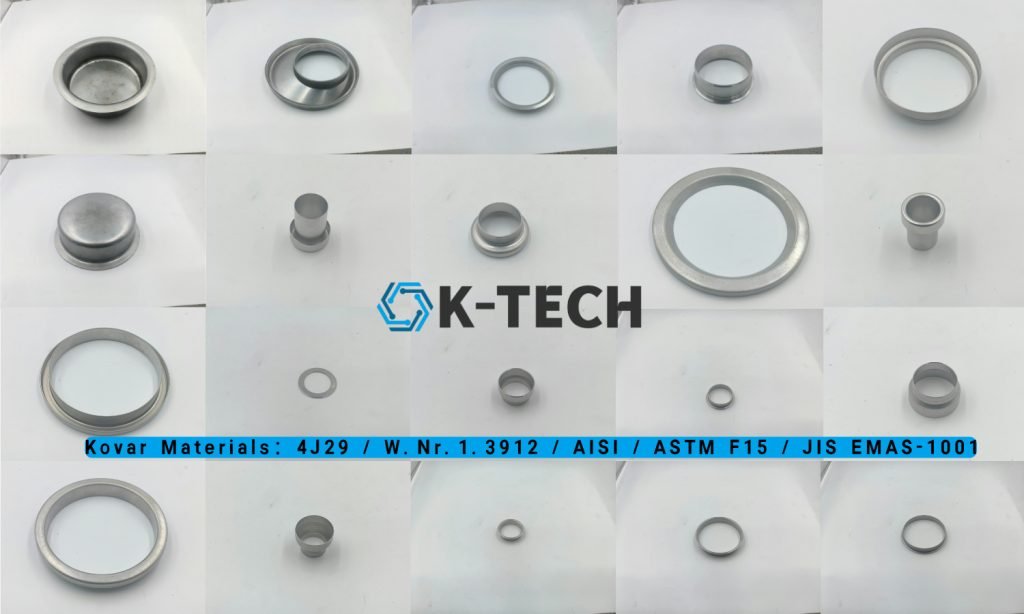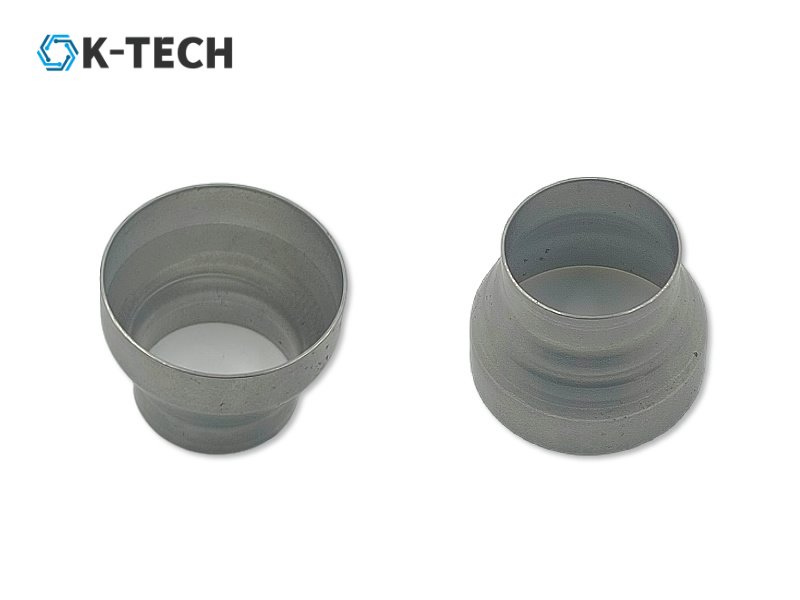
Kovar alloy and Invar alloy (Invar, typically grade Invar 36) are both low-expansion precision alloys, but they differ significantly in design objectives, core properties, and application scenarios. The key differences can be analyzed from the following dimensions:
I. Core Composition and Design Objectives
| Characteristic | Kovar Alloy | Invar 36 Alloy |
|---|---|---|
| Main Composition | Fe (53%), Ni (29%), Co (17%) | Fe (64%), Ni (36%) |
| Key Additive Element | Cobalt (Co) – adjusts thermal expansion coefficient to match glass/ceramics | No cobalt; pure Fe-Ni system |
| Design Goal | Achieve thermal expansion matching with borosilicate glass and alumina ceramics (to avoid stress at sealed interfaces) | Pursue extremely low thermal expansion coefficient (near-zero expansion) to reduce temperature-induced dimensional changes |
II. Thermal Expansion Performance (Core Difference)
| Indicator | Kovar Alloy | Invar 36 Alloy |
|---|---|---|
| Coefficient of Thermal Expansion (CTE) | 5.3 ppm/°C (20-500°C) | 1.2 ppm/°C (-200-200°C) |
| Temperature Range Suitability | Stable at medium to high temperatures (-55°C to 500°C) | Optimal performance at low to room temperatures (-200°C to 200°C) |
| Thermal Expansion Behavior | CTE increases slowly and linearly with temperature | Extremely low CTE in the low-temperature range (<200°C); CTE rises significantly above 200°C (due to Ni order-disorder phase transition) |
| Matching Targets | Borosilicate glass (e.g., Pyrex, CTE≈5.0 ppm/°C), alumina ceramics (CTE≈6.5 ppm/°C) | No specific matching materials; focuses on its own dimensional stability |
III. Mechanical Properties and Processability
| Characteristic | Kovar Alloy | Invar 36 Alloy |
|---|---|---|
| Tensile Strength | ~517 MPa in annealed state; up to 700 MPa after cold working | ~450 MPa in annealed state; up to 800 MPa after cold working |
| Elongation | ~30% in annealed state; can be cold-formed into complex shapes | ~25% in annealed state; prone to work hardening during cold working |
| Processing Difficulty | Good weldability (argon arc welding, laser welding); easy to machine and deep draw | Significant work hardening; requires high-frequency annealing to relieve stress; prone to tool adhesion during machining |
| Heat Treatment Requirements | Needs degassing (900°C in wet hydrogen) and oxide layer treatment (500-600°C) to optimize sealing performance | Requires high-temperature annealing (600-800°C) to eliminate processing stress and prevent subsequent dimensional changes |
IV. Magnetic Properties and Environmental Resistance
| Characteristic | Kovar Alloy | Invar 36 Alloy |
|---|---|---|
| Magnetism | Ferromagnetic; Curie point ≈425°C (retains magnetism at high temperatures) | Weakly magnetic; Curie point ≈230°C (magnetism weakens significantly above this temperature) |
| Corrosion Resistance | Surface oxide layer (NiO/CoO) enhances corrosion resistance; can be nickel/gold-plated for better protection | Poor corrosion resistance; prone to rusting; requires surface plating (e.g., chrome plating) for protection |
| High-Temperature Stability | Stable below 500°C; oxidation rate accelerates above this temperature | CTE rises sharply above 200°C; unsuitable for high-temperature applications |
V. Typical Application Scenarios (Differentiated by Performance)
| Kovar Alloy | Invar 36 Alloy |
|---|---|
| 1. Glass-to-metal seals: electron tube enclosures, transistor bases, fiber optic connectors (utilizes thermal matching with glass) 2. Aerospace thermal control components: satellite sensor brackets, rocket engine temperature probes (resistant to medium-high temperature cycles) 3. Precision packaging: laser diode housings, MEMS device sealed bases (requires high airtightness) | 1. Length standards: precision measuring tools (micrometers), standard rulers (minimal temperature-induced dimensional changes) 2. Optical instruments: telescope mirror mounts, laser interferometer rails (avoids temperature-induced optical path deviation) 3. Low-temperature equipment: LNG storage tank connectors, superconducting magnet support structures (dimensionally stable at low temperatures) |
VI. Cost and Supply Chain
- Kovar: Contains 17% cobalt (a scarce metal with volatile prices, ~$30/lb in 2025), resulting in higher costs; supply chain is affected by cobalt resources.
- Invar 36: Only contains nickel (relatively accessible, ~$15/lb in 2025), with lower costs and a more stable supply chain.
Summary: The Essence of Core Differences
Kovar alloy is a “matching-type material” that achieves interface compatibility with glass/ceramics by precisely regulating its thermal expansion coefficient, solving the problem of seal failure.
Invar alloy is a “stability-type material” that achieves extreme dimensional stability over a wide temperature range (especially from low to room temperatures) by suppressing thermal expansion, addressing precision drift issues.
The choice between them depends on core needs: Kovar is preferred when bonding with brittle materials (glass/ceramics) is required; Invar is chosen when the material itself needs to resist temperature-induced dimensional interference.