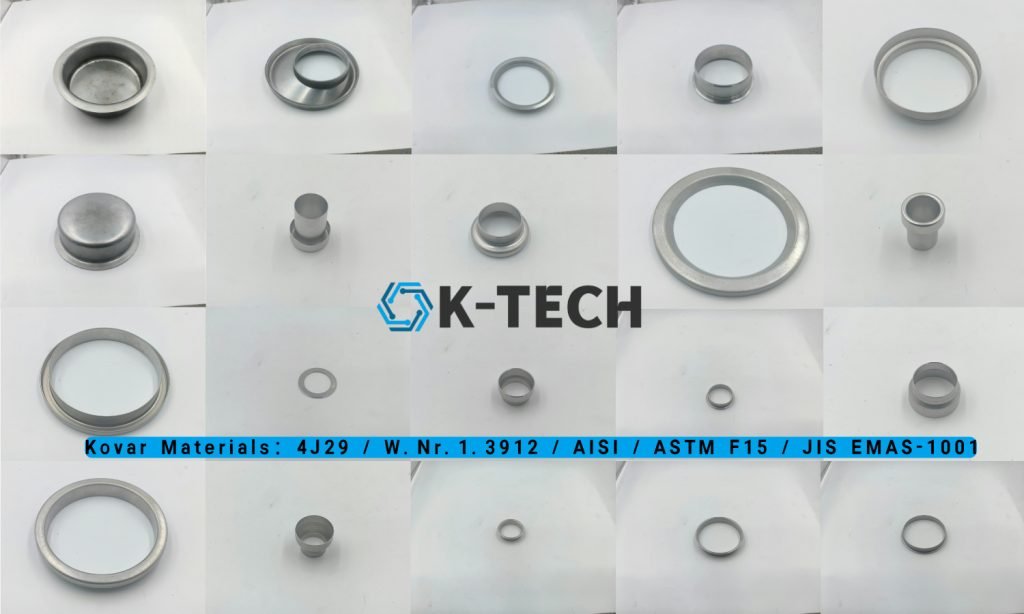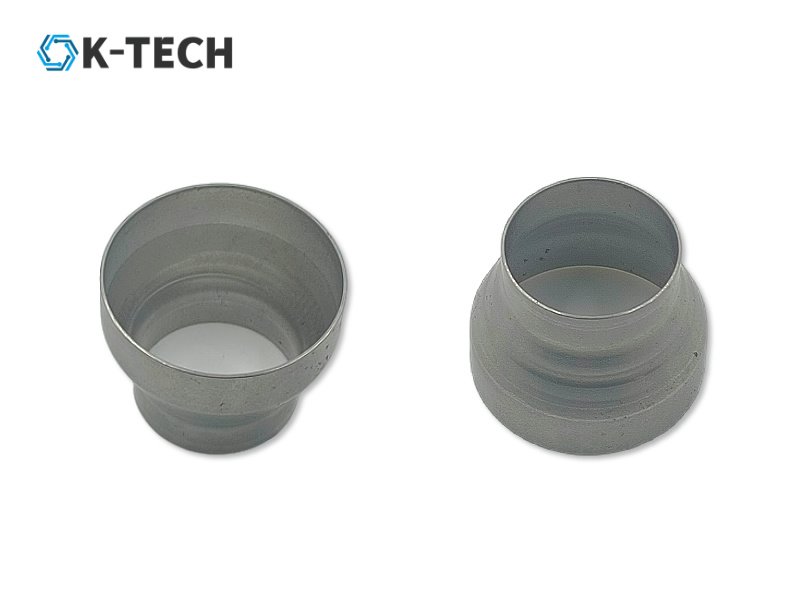
In the rapidly evolving semiconductor industry, where device miniaturization and reliability are paramount, kovar semiconductor components have emerged as the gold standard for hermetic packaging solutions. As electronic systems become more complex and operate in increasingly demanding environments—from deep space missions to medical implants—the need for materials that can maintain structural integrity and hermetic seals across extreme temperature cycles has never been greater.
This comprehensive guide explores everything engineers and procurement professionals need to know about kovar hermetic packaging, from material science fundamentals to manufacturing best practices and supplier selection criteria. Whether you’re designing semiconductor packages for aerospace applications or sourcing components for high-volume production, understanding Kovar’s unique properties will help you make informed decisions that balance performance, reliability, and cost-effectiveness.
What is Kovar Alloy?
Kovar, designated as 4J29 in Chinese standards and ASTM F15 (UNS K94610) internationally, is a precisely engineered iron-nickel-cobalt (Fe-Ni-Co) controlled expansion alloy specifically developed for glass-to-metal and ceramic-to-metal sealing applications. First introduced in the 1930s, Kovar has become the industry standard for hermetic packaging due to its exceptional ability to match the thermal expansion characteristics of borosilicate glass and alumina ceramics.
The alloy’s composition is strictly controlled within narrow ranges to ensure consistent thermal expansion properties:
- Nickel (Ni): 28.5-29.5% – Primary element for adjusting thermal expansion coefficient
- Cobalt (Co): 16.8-17.8% – Critical for fine-tuning CTE and enhancing high-temperature stability
- Iron (Fe): Balance (approximately 53-54%) – Matrix element providing mechanical strength
- Trace elements: Strictly controlled carbon (≤0.03%), manganese (≤0.60%), silicon (≤0.35%), with minimal sulfur and phosphorus to prevent embrittlement
This precise “29-17” nickel-cobalt ratio is not arbitrary—it represents the metallurgical recipe that achieves the optimal thermal expansion match required for reliable kovar glass to metal seal performance across the critical operating temperature range of semiconductor devices.
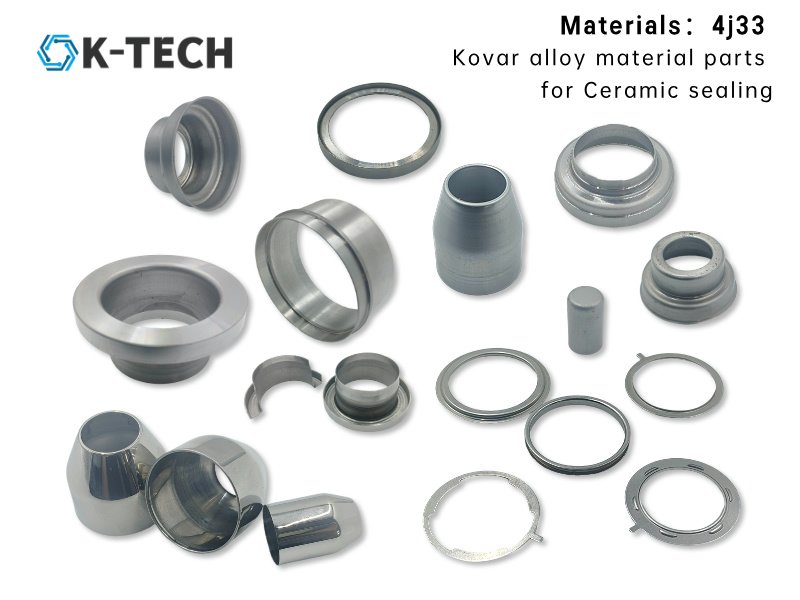
Why Kovar for Semiconductor Components?
The semiconductor industry relies on Kovar for three fundamental reasons that directly impact device reliability and longevity:
1. Thermal Expansion Coefficient Matching – Kovar’s carefully engineered CTE aligns almost perfectly with borosilicate glass (5.0-5.5 × 10⁻⁶/°C) and alumina ceramics, eliminating the thermal stress that causes seal failure when dissimilar materials experience temperature fluctuations.
2. Superior Glass-to-Metal Sealing Capability – The alloy forms exceptionally strong, vacuum-tight bonds with glass, achieving leak rates as low as 1 × 10⁻¹⁰ Pa·m³/s. This hermeticity protects sensitive semiconductor dies from moisture, dust, and corrosive environments.
3. Dimensional Stability Across Temperature Cycles – Kovar maintains consistent dimensions through repeated thermal cycling, ensuring electrical connections remain intact and package integrity is preserved throughout the device’s operational life.
For semiconductor applications where failure is not an option—such as aerospace electronics, medical implants, and defense systems—kovar semiconductor packaging provides the reliability margin that alternative materials simply cannot match.
Key Properties of Kovar for Semiconductor Applications
Understanding Kovar’s critical properties is essential for effective component design and material selection.
Thermal Expansion Coefficient (CTE)
The defining property that makes Kovar indispensable for semiconductor packaging is its precisely controlled thermal expansion:
- 5.3 × 10⁻⁶/°C (0-300°C) – The industry-standard value referenced in most engineering specifications
- 4.8-5.2 × 10⁻⁶/°C (20-300°C) – Typical range for properly heat-treated material
- 5.0-5.5 × 10⁻⁶/°C (20-400°C) – Matches borosilicate glass in the critical glass-sealing temperature range
This close CTE matching ensures that during both the high-temperature sealing process and subsequent device operation, the metal and glass/ceramic expand and contract at nearly identical rates, preventing the micro-cracking that leads to seal failure.
Hermetic Sealing Capability
Kovar achieves industry-leading hermetic performance through:
- Controlled surface oxidation that creates a strong chemical bond with glass
- Leak rates typically ≤ 1 × 10⁻⁹ Pa·m³/s for properly manufactured seals
- Resistance to thermal cycling degradation, maintaining seal integrity through thousands of temperature excursions
Mechanical Strength
Annealed Kovar provides robust mechanical properties for demanding applications:
- Tensile Strength: ~517 MPa (75,000 psi)
- Yield Strength: ~276 MPa (40,000 psi)
- Elongation: ~30% in 2 inches
- Hardness: HRB 80 (typical for annealed material)
These properties ensure Kovar components can withstand the mechanical stresses of manufacturing, assembly, and end-use operation without deformation or failure.
Magnetic Properties
Kovar is ferromagnetic below its Curie temperature of approximately 435°C (815°F). While this property is beneficial for electromagnetic shielding applications, it requires careful consideration in RF and microwave device design where magnetic permeability could affect signal integrity. For such applications, Kovar components may be specified with non-magnetic plating or alternative materials may be evaluated.
Main Kovar Semiconductor Component Applications
Kovar semiconductor components find application across virtually every segment of the electronics industry where reliability and hermeticity are critical requirements:
Ceramic Packages and Lids
Ceramic packages represent the largest application segment for Kovar in semiconductors. The alloy is used for:
- Package bases and frames in dual-in-line (DIP) and quad flat no-lead (QFN) configurations
- Seal rings and lids for ceramic-to-metal brazing operations
- Heat spreaders and thermal management components within high-power packages
The precise CTE matching between Kovar and alumina ceramic (6.5-7.5 × 10⁻⁶/°C) ensures reliable, stress-free brazed joints that maintain hermeticity through extreme temperature cycling.
Glass-to-Metal Feedthroughs
Critical for both signal and power transmission into hermetic packages, Kovar feedthroughs provide:
- Multiple pin configurations from single conductors to high-density arrays
- Compatibility with various glass compositions for voltage isolation
- Consistent electrical performance across wide temperature ranges
These components are essential for applications ranging from satellite communications to medical implantable devices.
Transistor Headers and Diode Packages
For discrete semiconductor devices requiring environmental protection, Kovar provides:
- TO-style transistor headers with integrated glass-insulated leads
- Photodiode and laser diode packages requiring optical window sealing
- High-voltage diode packages requiring both electrical isolation and thermal conductivity
The alloy’s proven track record in these applications spans decades of reliable field performance.
IC Package Frames and Bases
Integrated circuit packages, particularly for high-reliability military and aerospace applications, extensively use kovar alloy 4J29 for:
- Package bases providing structural rigidity and thermal dissipation
- Lead frames requiring precise dimensional control through assembly processes
- Heat slugs for high-power ASICs and microprocessors
Vacuum Tube Components
While solid-state devices dominate most applications, vacuum tubes remain critical for high-power RF and microwave systems. Kovar serves as the primary material for:
- Tube bases and anode structures
- Grid and cathode support components
- Window seals requiring both hermeticity and RF transparency
Power Semiconductor Housings
The growing electric vehicle and renewable energy markets drive increasing demand for Kovar in power semiconductor packages, including:
- IGBT modules requiring high-voltage isolation
- SiC and GaN power device packages
- Thermal management components for power conversion systems
Kovar vs. Alternative Materials in Semiconductors
While Kovar remains the preferred choice for critical hermetic packaging applications, engineers often evaluate alternative materials based on specific application requirements and cost considerations.
Kovar vs. Alloy 42
Alloy 42 (42% nickel, balance iron), often called Nilo 42, is the most common Kovar alternative. The key differences:
表格
| Parameter | Kovar | Alloy 42 |
|---|---|---|
| Composition | 29% Ni, 17% Co, bal. Fe | 42% Ni, bal. Fe |
| CTE (0-300°C) | ~5.3 × 10⁻⁶/°C | ~5.3 × 10⁻⁶/°C |
| Glass Sealing | Excellent – proven for critical seals | Good – for less demanding applications |
| High-Temp Stability | Superior – cobalt enhances stability | Good up to moderate temperatures |
| Cost | Higher – cobalt content increases cost | Lower – typically 20-30% less expensive |
| Machinability | More challenging – work hardening tendency | Better – no cobalt, easier processing |
Recommendation: Choose Kovar for aerospace, medical, and military applications where seal reliability is absolutely critical. Specify Alloy 42 for cost-sensitive commercial applications where the risk profile allows for material optimization.
Kovar vs. Stainless Steel
Stainless steel (typically 304 or 316) is sometimes considered for semiconductor packaging due to its excellent corrosion resistance:
表格
| Parameter | Kovar | Stainless Steel 304 |
|---|---|---|
| CTE | ~5.3 × 10⁻⁶/°C | ~17.0 × 10⁻⁶/°C |
| Glass Sealing | Excellent | Poor – thermal mismatch causes cracking |
| Hermeticity | Industry-leading | Good for mechanical seals only |
| Cost | Higher | Lower |
| Corrosion Resistance | Good | Excellent |
Recommendation: Stainless steel is not suitable for glass-to-metal sealing applications due to extreme thermal mismatch. Reserve for mechanical enclosures where corrosion resistance is the primary requirement and hermetic sealing is achieved through other methods.
Kovar vs. Invar
Invar (36% nickel, balance iron) offers ultra-low thermal expansion for dimensional stability applications:
表格
| Parameter | Kovar | Invar 36 |
|---|---|---|
| CTE (0-100°C) | ~5.0 × 10⁻⁶/°C | ~1.3 × 10⁻⁶/°C |
| Glass Sealing | Excellent | Poor – CTE too low for glass matching |
| Primary Use | Hermetic sealing | Dimensional stability |
| Cost | Higher | Higher (pure nickel content) |
Recommendation: Invar is the material of choice for precision instruments, optical frames, and cryogenic applications where extreme dimensional stability is required. It is not suitable for glass-to-metal sealing applications.
Manufacturing Kovar Semiconductor Components
Producing high-quality kovar semiconductor components requires specialized manufacturing expertise and strict process control.
CNC Machining Considerations
Kovar presents unique machining challenges that demand specialized techniques:
Work Hardening Management: Kovar exhibits significant work hardening during machining. Solutions include:
- Using positive rake geometry to reduce cutting forces
- Maintaining consistent feed rates to avoid dwell marks
- Employing climb milling rather than conventional milling
- Using rigid machine setups to minimize vibration
Tool Selection: Carbide tools with proper coatings are essential:
- Uncoated carbide for general machining with adequate coolant
- TiCN or TiAlN coatings for high-speed operations
- PCD (polycrystalline diamond) for extreme high-volume production
- Sharp tools maintained through regular inspection and replacement
Cutting Parameters: Typical machining parameters for Kovar:
- Turning: 60-100 m/min surface speed, 0.15-0.3 mm/rev feed
- Milling: 50-80 m/min surface speed, 0.1-0.2 mm/tooth feed
- Drilling: 30-50 m/min surface speed with peck cycles for deep holes
- Abundant flood coolant for heat dissipation and chip evacuation
Heat Treatment Requirements
Proper heat treatment is critical for achieving Kovar’s specified properties:
Stress Relief Annealing: Performed after machining to remove residual stresses
- Temperature: 600-700°C
- Atmosphere: Inert or reducing atmosphere to prevent oxidation
- Duration: 1-2 hours followed by controlled cooling
Sealing Anneal: Required to optimize CTE for glass-to-metal sealing
- Temperature: 900 ± 20°C in hydrogen atmosphere
- Hold time: 1 hour followed by reheating to 1100 ± 20°C
- Final cooling: Controlled rate below 5°C/min to 200°C
This specific heat treatment cycle ensures the alloy achieves its characteristic thermal expansion profile and establishes the proper metallurgical structure for reliable sealing.
Quality Control and Standards
Kovar semiconductor component manufacturing requires rigorous quality control:
- Material Certification: ASTM F15 compliance with full material traceability
- Dimensional Inspection: CMM verification of critical features with GD&T compliance
- Leak Testing: Helium mass spectrometry for hermetic seal verification
- CTE Testing: Dilatometer testing to confirm thermal expansion characteristics
- Surface Finish: Ra values typically specified at 0.8-1.6 μm for sealing surfaces
Key Industries Using Kovar Semiconductor Components
The demand for kovar components spans multiple high-growth industries where reliability is non-negotiable.
Aerospace and Defense
The aerospace and defense sector represents the largest and most demanding market for Kovar semiconductor packages. Applications include:
- Satellite communication systems requiring 15+ year mission life
- Military aircraft avionics operating in extreme temperature environments
- Missile guidance systems experiencing severe vibration and thermal cycling
- Space exploration rovers and instruments exposed to cosmic radiation
For these applications, Kovar’s proven track record of reliability across decades of field service makes it the only acceptable material choice.
Medical Devices
Medical implantable and diagnostic devices require the ultimate in packaging reliability:
- Pacemaker and defibrillator electronics packages
- Implantable neural stimulators and drug delivery systems
- Diagnostic imaging components (MRI, CT scanner detectors)
- Surgical instrument electronics requiring sterilization compatibility
The hermetic sealing capability of kovar hermetic packaging ensures patient safety by preventing bodily fluid ingress into sensitive electronics.
Telecommunications and 5G
The global rollout of 5G infrastructure drives increasing demand for Kovar components:
- High-power RF transistor packages for base station power amplifiers
- Optical transceiver packages requiring hermetic fiber sealing
- Microwave and millimeter-wave device packages
- Filter and oscillator components requiring stable RF performance
As 5G networks expand globally—particularly in emerging markets across Africa, Southeast Asia, and Latin America—demand for reliable Kovar packaging continues to accelerate.
Automotive Electronics
The automotive industry’s transition to electrification creates significant new demand:
- Power semiconductor packages for EV traction inverters
- Battery management system (BMS) components
- ADAS (Advanced Driver Assistance Systems) sensor packages
- High-temperature under-hood electronics
With automotive electronics expected to account for 35-40% of vehicle cost by 2030, Kovar’s role in ensuring reliable operation in harsh under-hood environments continues to grow.
How to Select a Reliable Kovar Component Supplier
Choosing the right kovar components manufacturer is critical for ensuring product quality, delivery reliability, and long-term supply chain stability.
Certification Requirements
Look for suppliers with comprehensive quality certifications:
- ISO 9001: Basic quality management system certification
- IATF 16949: For automotive industry suppliers
- AS9100: Aerospace quality management system (critical for defense and space applications)
- ISO 13485: Medical device quality management certification
- ASTM F15 compliance: Specific Kovar material standard certification
Quality Control Process
Evaluate suppliers based on their quality infrastructure:
- In-house metallurgical testing capabilities including CTE measurement
- Helium leak testing capacity with proper calibration records
- Cleanroom manufacturing environment for sensitive semiconductor components
- Statistical process control (SPC) implementation for critical dimensions
- Full material traceability from raw material source to finished component
Global Shipping Capabilities
For organizations serving global markets, consider suppliers with proven experience in:
- Export compliance and international shipping documentation
- Customs clearance expertise for regulated materials
- China manufacturers serving Africa, SE Asia, Australia, Latin America with established logistics channels
- Local warehousing and regional distribution capabilities
- Multilingual technical support for global engineering teams
Chinese Kovar component manufacturers have emerged as particularly strong partners for emerging market supply due to competitive pricing, large-scale production capacity, and increasing investment in quality systems. When evaluating Asian suppliers, prioritize those with Western quality certifications and established export experience to your target markets.
Conclusion and Summary
Kovar semiconductor components represent the foundation of reliable hermetic packaging across virtually every critical electronics industry. The alloy’s unique combination of precisely matched thermal expansion, superior glass-to-metal sealing capability, and excellent mechanical properties make it irreplaceable for applications where failure is simply not an option.
Key takeaways for engineers and procurement professionals:
- Kovar (ASTM F15/4J29) provides CTE of ~5.3 × 10⁻⁶/°C, perfectly matched to borosilicate glass and alumina ceramics
- The alloy achieves industry-leading hermetic performance with leak rates ≤ 1 × 10⁻⁹ Pa·m³/s
- While alternatives like Alloy 42 offer cost advantages, Kovar remains essential for aerospace, medical, and military applications
- Proper manufacturing requires specialized machining expertise and strict heat treatment control
- Global demand is accelerating, driven by 5G deployment, EV adoption, and medical device innovation
- Chinese manufacturers offer competitive advantages for supplying emerging markets in Africa, Southeast Asia, Australia, and Latin America
As electronic systems continue to push the boundaries of performance and reliability, the importance of proper material selection for semiconductor packaging will only increase. Kovar, with its nearly century-long track record of proven performance, remains the standard by which all other hermetic packaging materials are measured.
Ready to source high-quality Kovar semiconductor components for your next project? Contact Prekovar today for engineering support, material selection guidance, and competitive pricing for your global supply requirements. Our team of experts specializes in supplying certified Kovar components to markets across Africa, Southeast Asia, Australia, and Latin America, with full quality documentation and reliable delivery you can count on.