Introduction
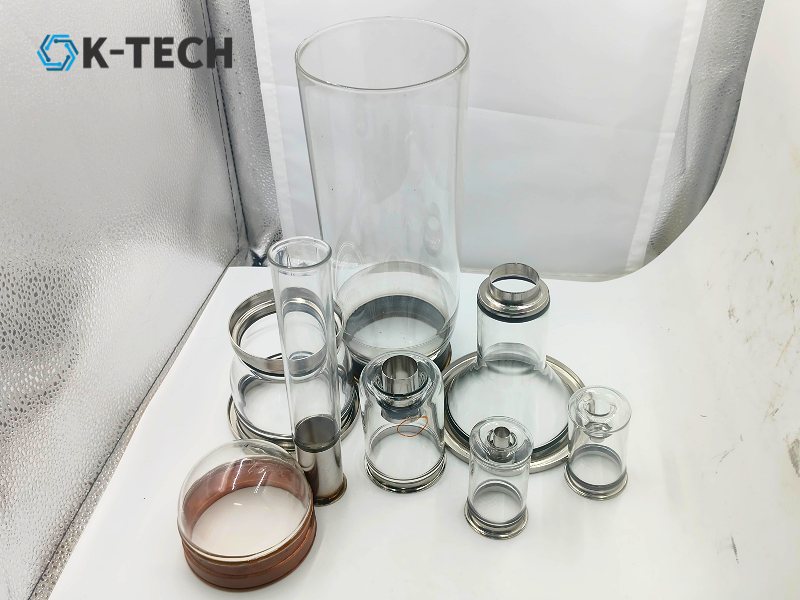
Kovar alloy, a specialized iron-nickel-cobalt (Fe-Ni-Co) material, is renowned for its unique thermal expansion properties that closely match those of borosilicate glass and ceramics. Developed in the 1930s by Corning Inc., this alloy has become indispensable in industries requiring precise dimensional stability under extreme temperature fluctuations, such as electronics, aerospace, and optics.
1. Composition and Variants
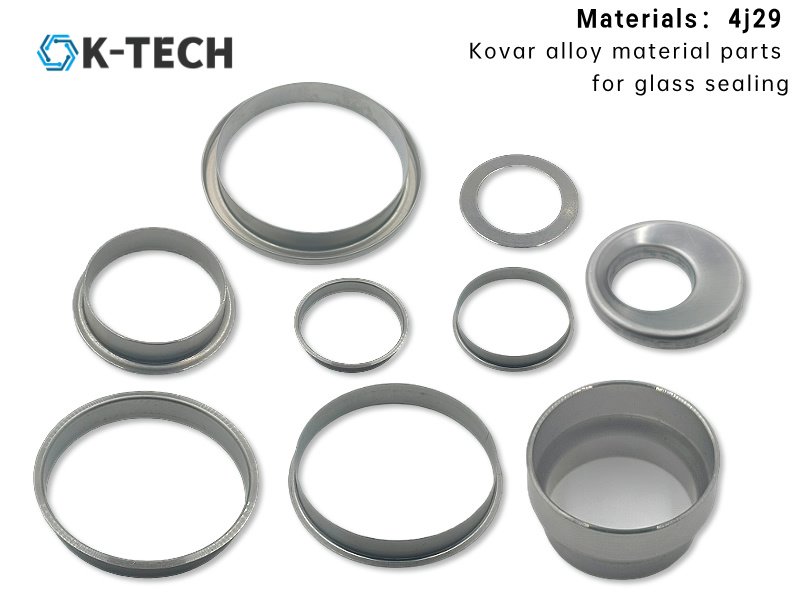
Kovar’s primary composition includes iron (Fe), nickel (Ni), and cobalt (Co), with standardized variants like 4J29 (Fe-29Ni-17Co) and 4J50 (Fe-50Ni). The exact composition depends on the application:
- 4J29: The most common variant, containing ~29% Ni, 17% Co, and the remainder Fe. Trace elements like manganese (Mn), silicon (Si), and carbon (C) are minimized to enhance purity and performance.
- 4J50: A nickel-rich variant (49.5–50.5% Ni) without cobalt, used for soft glass sealing.
The addition of cobalt in 4J29 improves wear resistance and thermal stability, making it costlier but more versatile than 4J50.
2. Key Properties
Kovar’s success lies in its tailored properties:
- Low Thermal Expansion Coefficient: Matches borosilicate glass (4.6–5.2 μm/m·°C between 30–450°C), minimizing stress during sealing processes.
- High Mechanical Strength: Tensile strength exceeds 570 MPa, with excellent ductility (elongation >29%).
- Corrosion Resistance: Resists oxidation and chemical degradation, even in harsh environments.
- Low-Temperature Stability: Maintains structural integrity down to -269°C, critical for cryogenic applications.
- Sealing Compatibility: Forms airtight bonds with glass/ceramics due to a dense oxide layer that enhances wettability.
3. Manufacturing and Processing
Kovar production involves advanced metallurgical techniques:
- Vacuum Induction Melting (VIM): Ensures high purity by minimizing impurities like sulfur and phosphorus.
- Electroslag Remelting (ESR): Further refines the alloy’s homogeneity, crucial for applications requiring precise thermal properties.
- Thermal Treatments: Stress-relief annealing (470–540°C) and pre-oxidation (800°C) optimize microstructure and sealing performance.
- Forming Methods: Cold/hot rolling, forging, and CNC machining are common, though specialized coatings are needed to reduce tool wear during machining.
4. Applications
Kovar’s versatility spans multiple high-tech sectors:
- Electronics: Seals vacuum tubes, transistors, and ICs due to its glass-matching expansion.
- Aerospace: Used in thermal control components (e.g., sensors) and rocket engine nozzles for extreme temperature resistance.
- Optics: Stabilizes optical devices like laser systems by preventing misalignment from thermal shifts.
- Medical Devices: Employed in MRI components and implantable devices for biocompatibility and durability.
- Energy: Facilitates hermetic sealing in solar panels and nuclear reactors.
5. Innovations and Challenges
Recent research focuses on enhancing Kovar’s performance:
- Composite Brazing: TiB-reinforced Ag-Cu-Ti fillers improve joint strength (131 MPa) in Al2O3/Kovar bonds, critical for aerospace applications.
- Additive Manufacturing: Exploring 3D printing to produce complex geometries while retaining thermal stability.
- Cost Reduction: Substituting cobalt in 4J29 or optimizing 4J50 for broader applications remains a priority.
Kovar alloy exemplifies the synergy between material science and industrial demand. Its unmatched thermal and mechanical properties ensure its relevance in cutting-edge technologies, from quantum computing to space exploration. As manufacturing techniques evolve, Kovar will continue to bridge the gap between precision engineering and extreme environmental challenges.