Introduction: Understanding Kovar and Invar Alloys
When selecting materials for precision engineering projects, two alloys frequently come up in technical discussions: Kovar vs Invar. Both are iron-based alloys renowned for their low thermal expansion properties, but they serve distinctly different purposes in industrial applications.
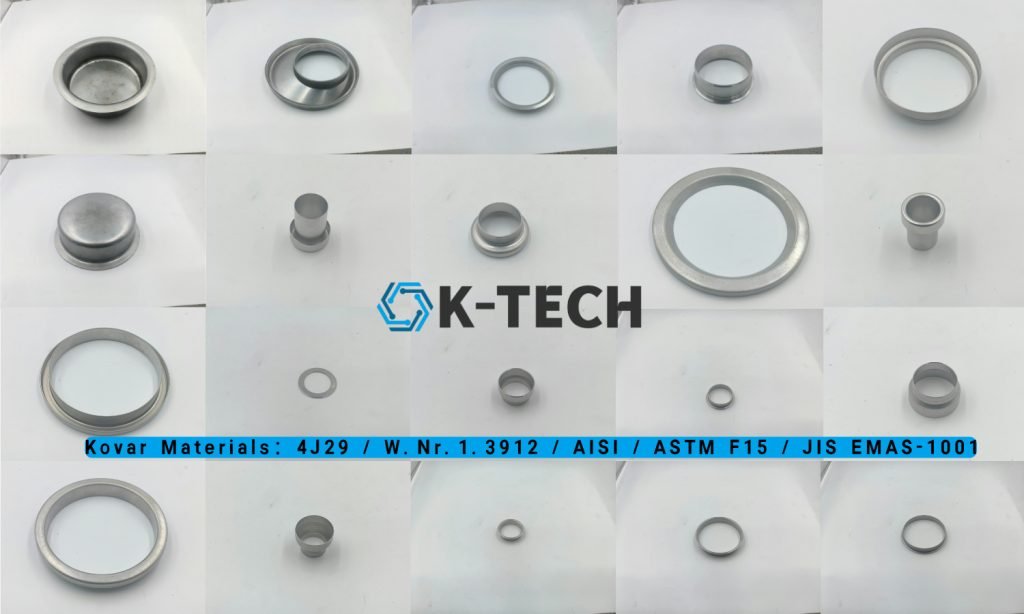
Kovar (ASTM F15) is a nickel-cobalt-iron alloy specifically engineered for glass-to-metal and ceramic-to-metal sealing applications. Its thermal expansion coefficient closely matches borosilicate glass, making it the preferred choice for hermetic packaging in electronics, semiconductors, and medical devices.
Invar (FeNi36, also known as Invar 36) is a nickel-iron alloy containing approximately 36% nickel. It exhibits the lowest coefficient of thermal expansion among all metals, making it ideal for applications requiring exceptional dimensional stability across temperature variations.
Understanding the differences between these two alloys is crucial for engineers, procurement specialists, and manufacturers seeking the optimal material for their specific requirements. This comprehensive guide will explore every aspect of Kovar vs Invar to help you make informed decisions.
Chemical Composition: What Makes These Alloys Different?
Kovar Composition
| Element | Content |
|---|---|
| Nickel (Ni) | 28.5% – 29.5% |
| Cobalt (Co) | 16.8% – 17.8% |
| Iron (Fe) | Balance (~54%) |
| Other elements | Manganese, Silicon, Carbon (trace) |
Invar Composition
| Element | Content |
|---|---|
| Nickel (Ni) | 35% – 37% |
| Iron (Fe) | Balance (~64%) |
| Other elements | Carbon, Manganese, Silicon (trace) |
Key takeaway: The addition of cobalt in Kovar is what enables its glass-matching thermal expansion properties. Invar’s higher nickel content (without cobalt) results in its exceptionally low thermal expansion coefficient.
Thermal Expansion Properties: The Critical Difference
The coefficient of thermal expansion (CTE) is where the most significant distinction between Kovar and Invar lies:
| Property | Kovar | Invar 36 |
|---|---|---|
| CTE at 25°C | 4.9 – 6.2 × 10⁻⁶/°C | 1.2 – 1.6 × 10⁻⁶/°C |
| Temperature Range | -70°C to 450°C | -100°C to 200°C |
| Glass Matching | ✅ Matches borosilicate glass | ❌ Not glass-matched |
| Curie Temperature | 435°C | 230°C |
Kovar’s CTE of approximately 5.9 × 10⁻⁶/°C closely matches that of borosilicate glass (such as Pyrex), making it ideal for creating stress-free, leak-proof seals between metal and glass components.
Invar’s CTE of approximately 1.2 × 10⁻⁶/°C is among the lowest of any engineering metal, providing unmatched dimensional stability when temperature changes occur.
Why Does This Matter?
- Kovar expands and contracts at rates similar to glass during thermal cycling, preventing seal failures and microcracks
- Invar remains virtually unchanged regardless of temperature fluctuations, making it perfect for precision instruments
Mechanical Properties Comparison
| Property | Kovar | Invar 36 |
|---|---|---|
| Density | 8.36 g/cm³ | 8.1 g/cm³ |
| Melting Point | 1430°C | 1425°C |
| Hardness (Brinell) | ~210 HB | ~160 HB |
| Tensile Strength | 483-552 MPa | 450-500 MPa |
| Yield Strength | 310-379 MPa | 280-350 MPa |
| Elongation | 25-30% | 30-45% |
Analysis:
- Kovar is harder and stronger, making it more suitable for mechanically demanding applications
- Invar is softer but offers better ductility, requiring more care during machining
Physical Properties and Appearance
| Property | Kovar | Invar |
|---|---|---|
| Color | Silver-gray with lustrous finish (due to cobalt) | Silver-gray with matte finish |
| Magnetic Properties | Ferromagnetic | Ferromagnetic (higher magnetism) |
| Corrosion Resistance | Good (due to cobalt content) | Moderate (may need protective coatings) |
| Weldability | Excellent, easy to weld | Good, but requires careful handling |
Applications: Where Each Alloy Excels
Kovar Applications
Kovar is the material of choice when glass-to-metal sealing is required:
- Electronic Packaging
- Semiconductor hermetic packages
- Transistor bases and headers
- IC lead frames
- RF and microwave components
- Aerospace & Defense
- Avionics packages
- Radar system components
- Satellite connectors
- Sensor housings
- Medical Devices
- Pacemaker components
- Implantable sensor housings
- Diagnostic equipment enclosures
- Telecommunications
- Fiber optic components
- 5G communication devices
- Vacuum tube assemblies
- Industrial Equipment
- Vacuum seals
- Pressure sensors
- High-reliability relays
Invar Applications
Invar excels in applications requiring dimensional stability:
- Precision Instruments
- Atomic clocks and chronometers
- Precision measuring equipment
- Coordinate measuring machines (CMM)
- Optical Systems
- Telescope mirrors
- Interferometers
- Laser system components
- Optical bench structures
- Cryogenic Applications
- LNG storage and transport
- Liquid nitrogen containers
- Cryogenic piping systems
- Scientific Research
- Particle accelerator components
- Research vacuum chambers
- Metrology systems
- Aerospace
- Satellite structural supports
- Gyroscope components
- Thermal control systems
Machinability: Processing Differences
| Aspect | Kovar | Invar 36 |
|---|---|---|
| Machining Difficulty | Moderate | More challenging |
| Tool Requirements | Standard carbide tools work well | Requires sharp, high-quality tools |
| Cooling | Oil-based lubricants recommended | Careful cooling to prevent distortion |
| Forming | Good cold and hot formability | Requires precise control |
| Surface Finishing | Easy to achieve smooth finishes | May require additional processing |
Expert Tip: Kovar is generally easier to machine for precision components. At Prekovar, we specialize in CNC machining of Kovar parts with tolerances up to ±0.001mm.
Cost Considerations: Kovar vs Invar Price
| Factor | Kovar | Invar |
|---|---|---|
| Raw Material Cost | Higher (due to cobalt content) | Lower |
| Machining Cost | Moderate | Higher (due to processing difficulty) |
| Availability | Good | Good |
| Overall Value | Best for sealing applications | Best for precision stability |
Note: While Kovar contains more expensive cobalt, its excellent machinability and superior glass-sealing properties often make it more cost-effective for sealing applications compared to alternative solutions.
How to Choose: Kovar or Invar?
Choose Kovar When:
- ✅ You need glass-to-metal or ceramic-to-metal sealing
- ✅ The application requires hermetic packaging
- ✅ You need good electrical conductivity alongside thermal properties
- ✅ Corrosion resistance is important
- ✅ You’re manufacturing electronic or semiconductor components
Choose Invar When:
- ✅ You need minimum thermal expansion for dimensional stability
- ✅ The application involves precision instruments or optical systems
- ✅ Operating in cryogenic temperatures
- ✅ Magnetic shielding is required
- ✅ You’re building scientific research equipment
Kovar vs Invar: Quick Comparison Table
| Feature | Kovar | Invar 36 |
|---|---|---|
| Primary Use | Glass-to-metal sealing | Dimensional stability |
| CTE (ppm/°C) | 5.9 | 1.2 |
| Glass Compatibility | Excellent | Not compatible |
| Nickel Content | 29% | 36% |
| Cobalt Content | 17% | 0% |
| Hardness | Higher (210 HB) | Lower (160 HB) |
| Strength | Higher (700 MPa) | Lower (500 MPa) |
| Machinability | Good | Moderate |
| Corrosion Resistance | Good | Moderate |
| Cost | Higher | Lower |
| Best For | Electronics, semiconductors, medical devices | Precision instruments, optics, cryogenics |
Why Kovar is Essential for Your Sealing Applications
For manufacturers and engineers working on electronic packaging, semiconductor components, and hermetic sealing applications, Kovar remains the gold standard material choice.
At Prekovar, we specialize in precision manufacturing of Kovar components:
- ✅ Custom CNC machining of Kovar parts with tight tolerances
- ✅ Glass-to-metal sealing and ceramic-to-metal bonding services
- ✅ ISO-certified quality control with full traceability
- ✅ Global shipping to Africa, South America, Southeast Asia, and Australia
- ✅ Fast turnaround for prototypes and production runs
Our team of experienced engineers can help you select the right Kovar grade and manufacturing process for your specific application requirements.
Frequently Asked Questions
Is Kovar more expensive than Invar?
Yes, Kovar is generally more expensive due to its cobalt content. However, for glass-sealing applications, Kovar often provides better overall value because it eliminates the need for expensive workarounds or alternative materials.
Can Kovar be used instead of Invar?
Not directly. While both alloys have low thermal expansion, Kovar is designed specifically for glass-matching applications, whereas Invar is optimized for minimal thermal expansion. Using the wrong material can lead to seal failures or dimensional instability.
What is the thermal expansion of Kovar vs Invar?
Kovar has a CTE of approximately 5.9 × 10⁻⁶/°C, which matches borosilicate glass. Invar has a much lower CTE of approximately 1.2 × 10⁻⁶/°C, providing near-zero thermal expansion.
Is Invar magnetic?
Yes, both Invar and Kovar are ferromagnetic. Invar has higher magnetic permeability, making it suitable for magnetic shielding applications.
What industries use Kovar?
Kovar is widely used in electronics, semiconductors, aerospace, defense, medical devices, telecommunications, and automotive industries for hermetic sealing applications.
What industries use Invar?
Invar is primarily used in precision instruments, optical systems, scientific research, cryogenic applications, and aerospace for applications requiring dimensional stability.
Conclusion
Understanding the differences between Kovar and Invar is essential for selecting the right material for your engineering applications. While both alloys offer low thermal expansion properties, their distinct characteristics make them suitable for different purposes:
- Choose Kovar for glass-to-metal sealing, electronic packaging, and hermetic applications
- Choose Invar for precision instruments, optical systems, and applications requiring maximum dimensional stability
At Prekovar, we specialize in precision Kovar manufacturing. Contact our engineering team today to discuss your Kovar machining and sealing requirements.
Ready to Get Started?
📧 Email: [info@prekovar.com]
🌐 Website: https://www.prekovar.com
📞 Consultation: Request a free quote for your Kovar components