Introduction
When it comes to ceramic to metal seal applications requiring exceptional thermal stability and hermetic performance, Kovar alloy stands out as the preferred material choice for engineers and procurement specialists worldwide.
As a professional Kovar precision machining manufacturer in China, we specialize in producing high-quality Kovar ceramic to metal seal components for demanding industries including aerospace, semiconductor, medical devices, and 5G communication systems.
In this comprehensive guide, you’ll learn everything about Kovar ceramic-to-metal sealing technology, from material properties to manufacturing processes and supplier selection criteria.
What is Kovar Alloy?
Kovar (also known as 4J29 alloy or ASTM F15) is a controlled-expansion glass-sealing alloy composed primarily of iron (Fe), nickel (Ni), and cobalt (Co). Its unique thermal expansion coefficient makes it ideal for matching with ceramic and borosilicate glass materials.
Chemical Composition of Kovar (4J29)
| Element | Composition |
|---|---|
| Nickel (Ni) | 28.5% – 30.0% |
| Cobalt (Co) | 16.8% – 17.8% |
| Iron (Fe) | Balance |
| Manganese (Mn) | ≤ 0.50% |
| Silicon (Si) | ≤ 0.20% |
| Carbon (C) | ≤ 0.020% |
Key Thermal Properties
- Thermal Expansion Coefficient: 4.6 – 5.2 × 10⁻⁶ /°C (20-400°C)
- Compatible with: Alumina ceramic (Al₂O₃), Borosilicate glass (Pyrex)
- Matching coefficient: Matches 95% Al₂O₃ ceramic and borosilicate glass
This precise thermal expansion matching is why Kovar is the material of choice for hermetic packaging applications requiring long-term reliability.
Understanding Ceramic to Metal Seal Technology
What is Ceramic to Metal Sealing?
Ceramic to metal seal is a joining technology that creates an airtight, hermetic bond between ceramic components and metal alloys. This technology is essential for:
- Electronic packaging requiring complete hermeticity
- Applications exposed to extreme temperature variations
- Environments with high pressure or vacuum conditions
- Devices requiring long-term reliability (20+ years)
Why Kovar for Ceramic to Metal Seals?
| Advantage | Description |
|---|---|
| Thermal Expansion Match | Kovar’s CTE matches alumina ceramic (5.8-6.2 × 10⁻⁶/°C) |
| Hermetic Performance | Leak rates typically < 1×10⁻⁹ atm·cc/sec |
| High Reliability | Proven in aerospace and military applications for decades |
| Temperature Resistance | Stable performance from -196°C to +450°C |
| Machinability | Can be precision machined to tight tolerances (±0.005mm) |
Types of Kovar Ceramic to Metal Seals
1. Direct Bonded Copper (DBC) Seals
DBC ceramic to metal seal using Kovar provides:
- Excellent thermal conductivity
- High current carrying capacity
- Typical use: Power electronics, IGBT modules
2. Brazed Ceramic to Metal Seals
Kovar brazed assemblies use metallic braze alloys (Ag-Cu, Au-Ni) to create strong hermetic seals:
- Versatile for complex geometries
- Wide temperature range capability
- Typical use: Semiconductor packages, sensor housings
3. Soldered Ceramic to Metal Seals
For applications requiring lower processing temperatures:
- Excellent for temperature-sensitive components
- Good for prototyping and small batch production
- Typical use: Medical devices, optical assemblies
4. Glass-Ceramic to Metal Seals
Kovar with matching glass-ceramic materials:
- Maximum hermeticity for vacuum applications
- Excellent dielectric properties
- Typical use: Vacuum tubes, electron tubes, particle accelerators
Kovar Ceramic to Metal Seal Applications
Aerospace & Defense
Kovar ceramic to metal seal components are critical in:
- Avionics electronic packaging
- Missile guidance systems
- Satellite communication modules
- Radar and RF systems
Semiconductor & Electronics
The semiconductor industry relies on Kovar hermetic packaging for:
- Transistor and IC packages
- LED substrates
- RF power modules
- Photonic devices
5G & Communication Infrastructure
With the development of 5G communication systems, Kovar components are essential for:
- Base station RF modules
- Antenna feed networks
- Waveguide components
- Fiber optic modules
Medical Devices
Medical applications require:
- Implantable device packaging
- Diagnostic equipment sensors
- Surgical instrument components
- MRI machine components
Scientific Instruments
Research facilities use Kovar seals for:
- Particle physics detectors
- Vacuum chamber components
- Mass spectrometers
- Cryogenic systems
Manufacturing Process of Kovar Ceramic to Metal Seal Components
Our Precision Machining Capabilities
As an experienced Kovar parts manufacturer in China, we offer comprehensive machining services:
| Process | Capability | Tolerance |
|---|---|---|
| CNC Milling | 3-axis, 4-axis, 5-axis | ±0.01mm |
| CNC Turning | Swiss type, multi-spindle | ±0.005mm |
| Wire EDM | Complex geometries, small features | ±0.02mm |
| Grinding | Surface finish Ra 0.4-1.6 | ±0.005mm |
| Polishing | Mirror finish, electro-polish | Ra 0.1-0.2 |
| Heat Treatment | Stress relieving, hardening | Controlled |
Surface Treatment Options
| Treatment | Application | Durability |
|---|---|---|
| Nickel Plating | Enhance solderability | Standard |
| Gold Plating | High-reliability applications | Premium |
| Electroless Nickel | Uniform coating | Industrial |
| Oxide Coating | Pre-braze preparation | Process step |
Technical Specifications We Manufacture
Standard Kovar Ceramic to Metal Seal Components
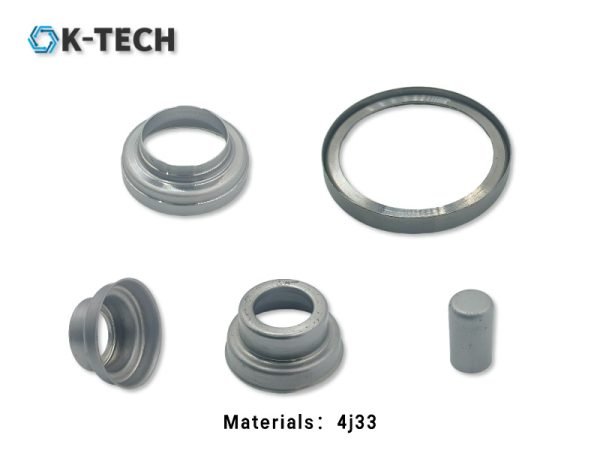
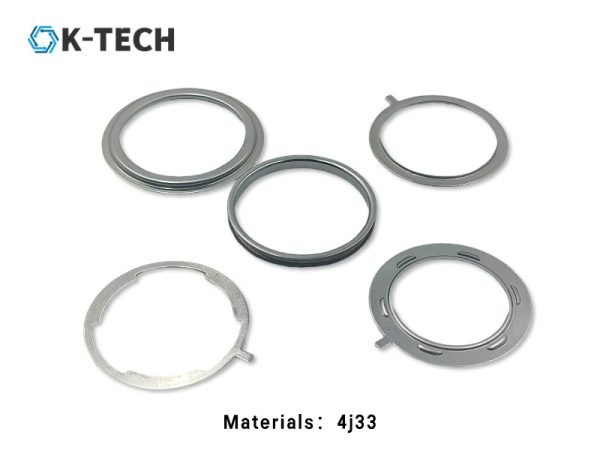
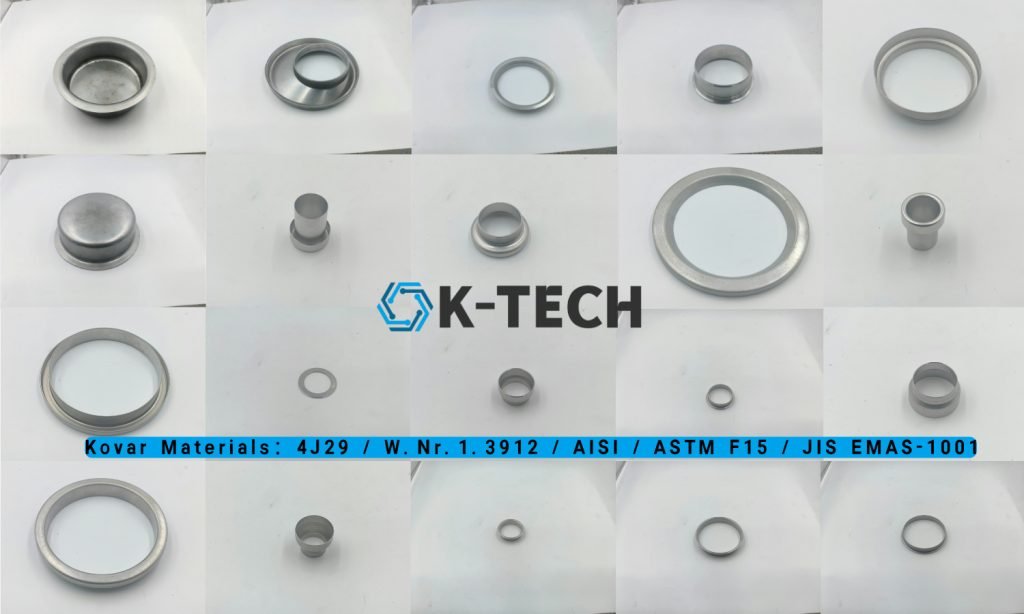
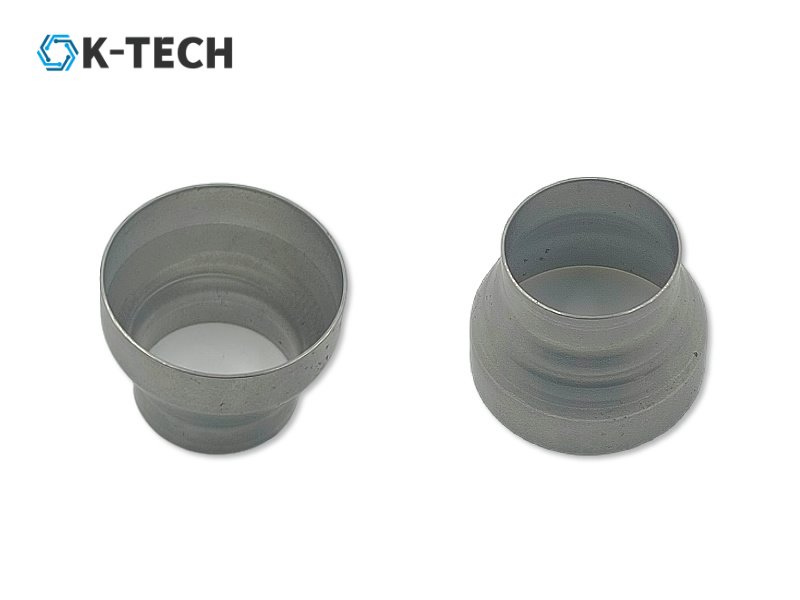
- Kovar tubes and rings: OD 2mm – 200mm
- Kovar flanges and discs: Custom sizes up to 300mm
- Kovar frames and brackets: Precision stamped or machined
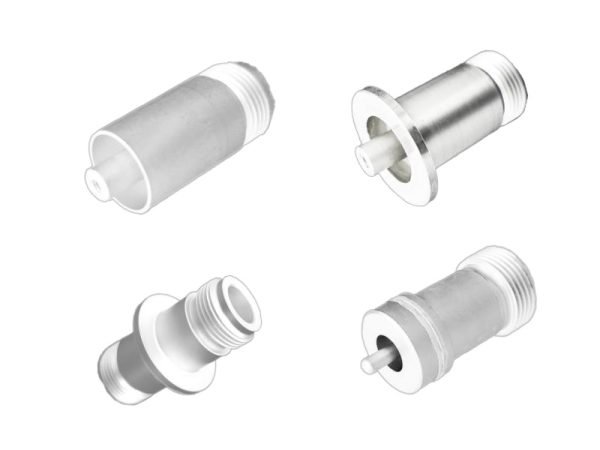
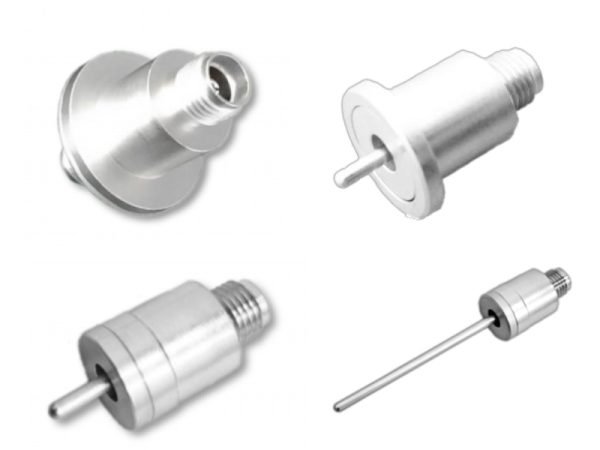
- Integrated assemblies: Ceramic-metal bonded with brazing
Precision Requirements
- Dimensional tolerance: Up to ±0.005mm
- Surface roughness: Ra 0.1μm achievable
- Flatness: < 0.01mm for flange seals
- Leak rate: < 1×10⁻⁹ atm·cc/sec (helium test)
Quality Assurance for Kovar Hermetic Packaging
Testing & Inspection
Every Kovar ceramic to metal seal component undergoes rigorous quality control:
- Material Verification — Chemical composition analysis
- Dimensional Inspection — CMM and optical measurement
- Helium Leak Testing — Mass spectrometer leak detection
- Thermal Cycling — -65°C to +150°C tests
- Visual & Surface Inspection — 100% inspection
Certifications Available
- ISO 9001:2015 Quality Management
- ISO 13485 (Medical devices)
- Mill Test Certificate (MTC)
- First Article Inspection (FAI) reports
Kovar vs Other Sealing Alloys
| Property | Kovar (4J29) | Invar (4J36) | Alloy 42 |
|---|---|---|---|
| CTE (20-100°C) | 5.2×10⁻⁶/°C | 1.5×10⁻⁶/°C | 4.5×10⁻⁶/°C |
| Ceramic Match | Excellent (Al₂O₃) | Poor | Good |
| Machinability | Good | Fair | Good |
| Cost | Moderate | High | Low |
| Application | General hermetic | Cryogenic | Electronics |
For ceramic to metal seal applications requiring alumina ceramic matching, Kovar (4J29) remains the optimal choice.
Why Source Kovar Ceramic to Metal Seal Components from China?
Cost Advantages
- Competitive pricing: 30-50% lower than Western manufacturers
- Direct from factory: No middleman markup
- Volume discounts: Economies of scale for large orders
- Prototype to production: Cost-effective small batch options
Manufacturing Excellence
- Advanced equipment: German and Japanese CNC machines
- Skilled workforce: Experienced engineers and technicians
- Quality systems: ISO certified manufacturing processes
- Quick turnaround: 7-15 days for prototypes, 2-4 weeks for production
Supply Chain Benefits
- Flexible MOQ: From 1 piece for prototypes to mass production
- Full documentation: MTC, CMs, inspection reports
- Global shipping: Experienced with international logistics
- Technical support: English-speaking engineers available
How to Choose a Kovar Ceramic to Metal Seal Supplier
Key Selection Criteria
- Material Certification — Verify Kovar (4J29) chemical composition
- Machining Capability — CNC, EDM, grinding, polishing
- Hermetic Testing — Helium leak testing capability
- Quality System — ISO 9001 or equivalent certification
- Experience — Track record in your industry sector
- Communication — Responsive technical support
Red Flags to Avoid
- Suppliers unable to provide material certificates
- No in-house testing or inspection capability
- Unwilling to provide samples or prototypes
- Vague quality specifications
- No export documentation experience
Frequently Asked Questions
What is the typical lead time for Kovar ceramic to metal seal parts?
Prototype samples: 7-15 days. Production orders: 2-4 weeks after approval.
What is the minimum order quantity?
We accommodate both prototype (1-10 pieces) and production (100+ pieces) orders.
Can you match specific CTE requirements?
Yes, we can verify thermal expansion coefficients and recommend appropriate Kovar variants.
What file formats do you accept for custom designs?
We accept STEP, IGES, DXF, PDF drawings, and can work from samples.
Do you provide first article inspection reports?
Yes, FAI reports with full dimensional data are standard for production orders.
What are your quality specifications for hermeticity?
Standard leak rate: < 1×10⁻⁸ atm·cc/sec; premium available: < 1×10⁻⁹ atm·cc/sec.
Conclusion
Kovar ceramic to metal seal technology remains essential for applications requiring superior hermeticity, thermal stability, and long-term reliability. From aerospace electronics to medical devices and 5G communication infrastructure, Kovar components provide the performance that critical applications demand.
As an experienced Kovar precision machining manufacturer in China, we combine quality craftsmanship with competitive pricing to serve global customers. Our comprehensive capabilities include CNC machining, EDM, grinding, brazing, and complete quality inspection.
Ready to discuss your Kovar ceramic to metal seal requirements?
📧 Email: [info@prekovar.com]
🌐 Website:www.prekovar.com
📞 Consultation: Get a free technical evaluation for your project
Related Products
We also supply comprehensive Kovar precision components:
- Kovar glass to metal seal parts
- Kovar electronic package components
- Kovar RF connector parts
- Kovar sensor housings
- Kovar aerospace components
- Kovar semiconductor packaging