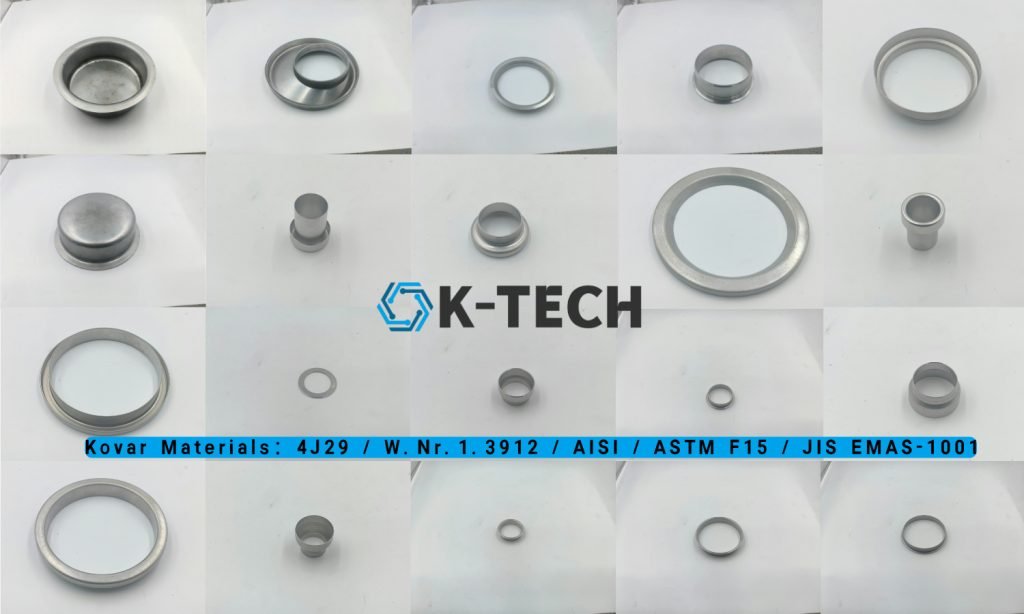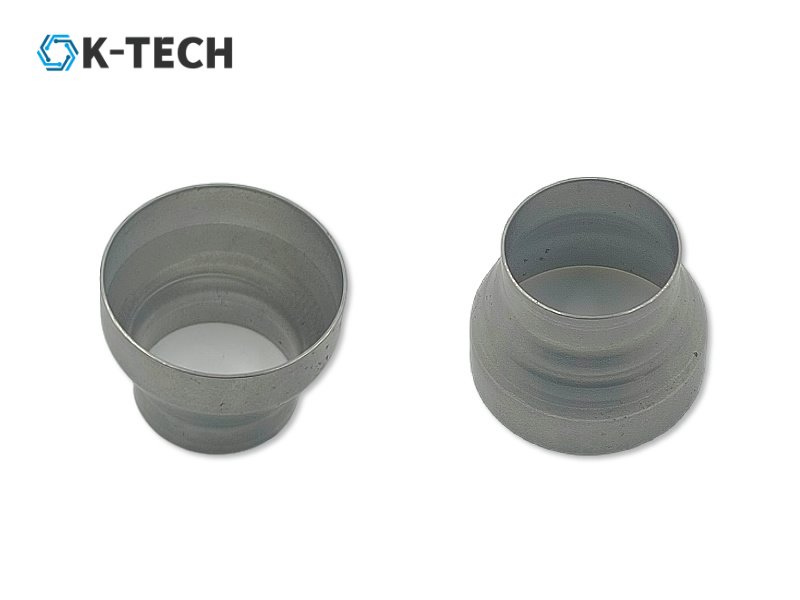
ASTM F15 Kovar (Kovar alloy) is an iron-nickel-cobalt alloy, and its welding performance is crucial in fields such as electronic packaging and vacuum devices. The following is a detailed analysis of its welding performance with other materials from aspects of welding methods, material compatibility, process challenges and solutions:
I. Welding Methods and Material Compatibility
- Brazing
- Connection with Glass/Ceramics: The welding of Kovar with glass or ceramics is mainly achieved through brazing, using gold, silver, and copper-based brazing fillers (such as Au-20Sn, Ag-Cu-Ti). Its thermal expansion coefficient (about 5.3×10⁻⁶/℃ at 30-450℃) is highly matched with borosilicate glass and alumina ceramics, which can effectively reduce cracking caused by thermal stress.
- Process Points: Before welding, Kovar needs to be pre-oxidized (e.g., oxidized in air at 800℃) to form a dense oxide layer (mainly composed of NiO and Fe₂O₃) with a thickness of about 0.2-0.4mg/cm², so as to enhance the wettability of the brazing filler and the interface bonding force. In recent years, laser remelting technology has been used for local modification of the Kovar surface to further optimize the wetting effect and shorten the process cycle.
- Fusion Welding
- Connection with Metals: Kovar can be fusion-welded with copper, stainless steel, nickel-based alloys, etc., by TIG welding, laser welding, electron beam welding and other methods. For example, when laser welding is used to weld Kovar and 316L stainless steel, the heat input needs to be controlled to avoid grain coarsening, and the tensile strength of the weld can reach more than 500MPa.
- Challenges and Countermeasures:
- Thermal Stress: When welding with copper, due to the large difference in thermal expansion coefficients between the two (Kovar is 5.3×10⁻⁶/℃, copper is 17×10⁻⁶/℃), a transition layer (such as nickel plating or molybdenum-copper alloy) or stepped welding parameters should be used to relieve stress.
- Element Migration: At high temperatures, nickel and cobalt may diffuse to the weld, leading to the formation of brittle phases. This phenomenon can be inhibited by controlling the welding temperature (such as the vacuum environment of electron beam welding) or adding an intermediate layer (such as nickel foil).
- Resistance Welding
- Applicable Scenarios: It is often used for spot welding or seam welding of Kovar and thin metal sheets (such as copper and nickel), especially for connecting lead wires and substrates in electronic packaging.
- Precautions: The surface must be strictly cleaned before welding (such as pickling to remove oxide scale), and the electrode pressure and welding time should be controlled to avoid spatter and uneven nugget.
II. Key Control Factors of Welding Process
- Surface Treatment
- Cleaning and Activation: Use sandblasting, polishing or pickling (such as 10% hydrochloric acid + 10% nitric acid solution) to remove surface oil and oxide layers to ensure the purity of the welding interface.
- Pre-oxidation Treatment: For glass sealing, the thickness of the pre-oxidation layer must be precisely controlled. Excessive thickness is prone to interface peeling, and insufficient thickness results in poor wettability.
- Atmosphere Protection
- Inert Gas or Vacuum: Fusion welding and brazing should be carried out in argon, nitrogen or vacuum to prevent oxidation of the alloy at high temperatures. For example, the argon flow rate should be maintained at 10-15L/min during TIG welding, and electron beam welding should be operated in a vacuum environment of 10⁻³-10⁻⁴Pa.
- Wet Hydrogen Treatment: Heating to 950-1050℃ in saturated wet hydrogen before welding (purification and degassing treatment) can eliminate internal pores and improve welding toughness.
- Temperature and Cooling Control
- Heating Rate: When brazing glass, the heating rate should be controlled below 4℃/min to avoid thermal shock; during fusion welding, pulsed laser or stepped heating should be used to reduce the width of the heat-affected zone.
- Cooling Method: Slow cooling (such as furnace cooling) can reduce residual stress, while rapid cooling (such as water cooling) may cause martensitic transformation and increase the risk of brittleness.
III. Typical Application Scenarios and Performance
- Electronic Packaging
- Glass-Metal Sealing: After brazing Kovar and glass, the air tightness can reach more than 10⁻⁹Pa·m³/s, which is widely used in transistor and integrated circuit casings, etc.
- Metal-Metal Connection: In the packaging of semiconductor lasers, Kovar is connected to the silicon carbide ceramic transition heat sink through gold-tin brazing, which reduces the thermal resistance by 14.7% and improves the electro-optical conversion efficiency by 12%.
- Electrovacuum Devices
- Electrode Welding of Electron Tubes: Electron beam welding is used to fuse Kovar and molybdenum electrodes, the weld has no pores, and the tensile strength exceeds 80% of the base metal.
- Vacuum Sealing Requirements: After welding, a helium mass spectrometry leak test must be performed to ensure that the leak rate is lower than 10⁻⁸Pa·m³/s.
IV. Common Defects and Preventive Measures
- Cracks
- Causes: Concentrated thermal stress, brittleness of brazing filler, or rapid cooling during fusion welding.
- Countermeasures: Optimize thermal expansion matching, adopt flexible connection structures (such as bellows), or perform post-weld stress relief annealing (holding at 470-540℃ for 1-2 hours).
- Porosity
- Causes: High gas content in the brazing filler, insufficient protective gas, or incomplete surface cleaning.
- Countermeasures: Use vacuum-smelted brazing fillers, strengthen inert gas protection, and perform ultrasonic cleaning before welding.
- Interface Peeling
- Causes: Excessively thick pre-oxidation layer or poor wettability of the brazing filler.
- Countermeasures: Precisely control the oxidation time and temperature, or switch to active brazing fillers (such as silver-copper alloys containing titanium).
V. Summary
ASTM F15 Kovar has excellent welding performance, especially in connection with glass, ceramics and some metals. By reasonably selecting welding methods (such as brazing, laser welding), optimizing process parameters (such as pre-oxidation treatment, atmosphere protection) and adopting transition layer design, problems such as thermal stress, wettability and interface reaction in dissimilar material welding can be effectively solved. In practical applications, personalized welding schemes should be formulated according to specific scenarios (such as vacuum environment, high-temperature service), and surface treatment and process quality must be strictly controlled to ensure the reliability and long-term stability of welded joints.